South Africa is a dwelling of several cultural and ethnic groups. One of them being the isiXhosa. This group is the second largest cultural group in the country after the Zulu speaking one. As per a tradition, it is said that the first person on Earth was an isiXhosa leader.
These Xhosa people are a Bantu ethnic group mainly from Southern Africa seen in the Eastern Cape, South Africa. For last two centuries, they are spread across the southern and central-southern parts of the nation. A significant yet small isiXhosa (Mfengu) community is found in Zimbabwe as well. These people from the Xhosa group are divided into tribes like AmaRharhabe, AmaGcaleka, ImiDushane, ImiDange, and AmaNdlambe.
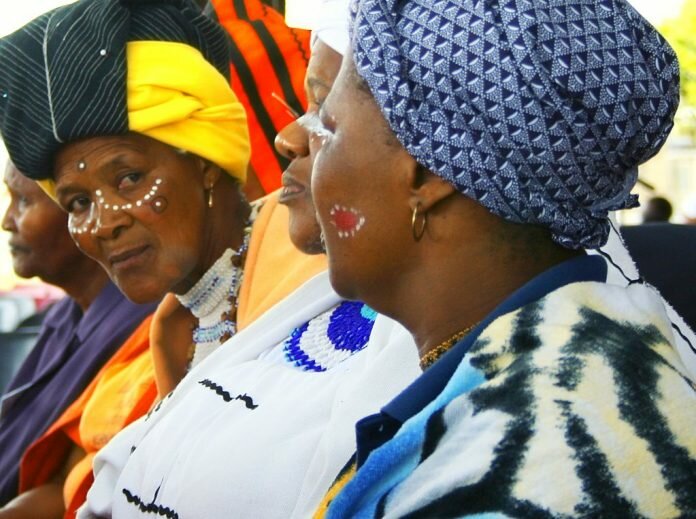
The cultural diversity among the Xhosas is worth exploring. The dressing of the isiXhosa group is complex and it signifies a person’s standing in the society. The dressing explains if the person is a senior, married, single, new wife or have had a baby. Each aspect is shown through the headdress and the dress. For instance, if a woman wears a long skirt with no slit and it is combined with a marriage bib, and two beaded aprons then the woman is a widow.
If the person wears a very elaborate hat then that explains her seniority. Among girls, only the younger ones can go bare-breasted. Another popular thing is the pipe smoking habit among Xhosa women and you can find different types of beaded pipes. Also, isiXhosa people have a practice of daubing called as ukuqaba, putting red clay faces and bodies. Many men and women also put cosmetic white clay.
Traditionally, among men, stick fighting was a very common pastime and for the job, mostly take care of cattle. On the other hand, women took care of crops and household chores. The amaXhosa leaders were the ones who initiated the fight against apartheid. Among the two heroes who fought were Nelson Mandela and Desmond Tutu.