By: Clyde Ramalaine
Throughout time those who write history have always attempted to also manage it. I thought of this as I tried to make sense of the March 26, 2018 Spanish EL Pais Newspaper interview of former President of the ANC and SA Thabo M. Mbeki. This interview like all others in our polarized political inspired by economic interest context warrants engaging.
This 4-minute plus clip which starts with a claim that “”… South Africans generally understood that part of what’s happened during the Zuma years has been the entrenchment of corruption in government and society. So this is part of the problem. (This) entrenchment of corruption led to what is called state capture, which means that you have a particular business family that became so important it was taking decisions on behalf the government. “The Zuma phenomenon was not an individual phenomenon, it was systemic.”
What we are confronted with is the question, to what extent is what Mbeki shares in this interview the gospel or truthful? It is my conviction that this interview of Mbeki simply cannot go unchallenged for it will despite its glaring contradictions pass for the gospel on the former president Zuma’s administration or the SA state between 2009 – 2018 if not engaged. Mbeki thus carelessly rehash the crafted narrative attributable to Ramaphosa for its coinage in wilful ignorance of expression of “nine wasted years.” A notion long debunked by the current ANC -Chairperson Gwede Mantashe among others.
We know that Mantashe in March 2019 rebuked current president Ramaphosa for his erstwhile claims of “nine wasted years” about his predecessor’s leadership. Mantashe said, “The nine wasted years is a myth. Over the past nine years, it was under the leadership of President Jacob Zuma that there was a stronger focus on education. We split education into basic education and higher education, and that focus improved our performance. We must tick that is not wasted. Access to ARVs, a war against HIV/Aids was intensified under this leadership. We can list them: health, education, agriculture. You can say the past four years were difficult. That problem is what we call a desert in the journey and we’ll never destroy ourselves because of what we call a patch of a desert.”
When Mbeki returned from his self-imposed exile in absence of participating in the SA discourses and ventured an opinion of rebuke and reprimand of the ANC under Zuma, Mantashe equally in March 2016 asserted, “Mbeki was running the risk of failing to appreciate the fact that, we are mopping the mess that was left by them [Mbeki era] that is part of the denialism they leave a mess we are mopping up they say we are in denial.” Perhaps we must ask why Mbeki continues with this narrative which he defines his one-sided analysis of his successor in leadership?
Firstly Mbeki speaks of “…“”… South Africans generally understood that that part of what’s happened and during the Zuma years has been the entrenchment of corruption in government and society”. Right here Mbeki the thinker dispense with reason since he leans on a broken crutch in claim of “South Africans” generally knowing without seeing a need to ask why and how South Africans came to know. Mbeki knows that had he attempted to be honest or objective he would have to prefix a South African populace’s knowledge with as led by a one-dimensional media-driven dominant narrative. How convenient and shallow when he lamented the power of the media in dominant narrative constructions and maintenance when they wrote about him back then. Unless he forgot the media cannot be trusted as the voice of the masses because it’s beholden to the pockets of the very ones who define a historical reality of colonial and apartheid special superior ruling class understood in race beneficiaries.
Secondly, Mbeki speaks with definitive certainty of a hitherto questionable and yet to be confirmed in existence as is the task of the Zondo Commission the claim of “state capture” which he merely regurgitates perhaps with glee since it works for his narrative extrapolated from pain since 2008. He does not as he did with xenophobia take us into confidence to explain his epistemology of the construct as is expected from intellectuals who engage in theoretical frameworks. He thus takes convenient and cheap shortcuts to resort to the claim of all South Africans knowing about ‘state capture’ without engaging the opinions of many of which I am one who has consistently while admitting to the presence of corruption since the dawn of democracy remonstrated the advanced existence of a media created crime of ‘state capture’ a hokum as extrapolated from a DA 2009 political Campaign of 3C’s immanent in cadre deployment, corruption and capture.
Mbeki the thinker sees no need to engage the flawed manner in which the Public Protector’s office under Advocate Thuli Madonsela was politically repurposed to give legs and now a body to the third component of a successful DA campaign. We warrant knowing why the meticulously analytical mind of Mbeki who protested the existence of HIV and AIDS in biological constructionism could not see the need to engage the orchestration of a successful DA political campaign that worked for some in the ANC’s narrow factional interest, as we have seen with the ascendance of a Ramaphosa whose CR17 used state capture as its jet- fuel to summit Mount ANC.
Thirdly, he speaks of an intensification of corruption which he finds immanent in the post-Mbeki era. We all know that as much as Mbeki is often rightly accredited for having contributed to our institutional dimensional frames of democracy he too stands accused of having played an undeniable part in the repurposing and destruction of the very institutions. One such pervasive example naturally comes to mind is the dismissal of the former NDPP, Advocate Vusi Pikoli. We must yet ask how damaging this singular move on the part of Mbeki in repurposing the NPA for his political aims was. We also should engage the political roles of Advocates Bulelani Ngcuka, Menzi Simelane, and Mokotedi Mpshe right up to Shaun Abrahams whom all functioned in a contaminated politicized NPA, the true legacy of Mbeki. We must give current NDPP Advocate Shamiela Batohi time to see if she will also be continuing the now entrenched political agenda of a sitting president.
On another level, a claim of an intensification of corruption by itself is an implicit and glaring admission of corruption in his era. We cannot and dare not assume we knew what the index of that corruption was. Yet Mbeki with this admission inadvertently concedes corruption did exist under his leadership. Corruption, therefore, could not have been invented or conceived by the Zuma era in what he now defines as systemic presence incidentally the belief of his former director-general, Pastor Frank Chikane and also the one who refused the biggest bribe to a single person of R600m while not sure who made the offer, former deputy finance minister Mcebisi Jonas.
In the fourth instance, Mbeki has hitherto often publicly denied and half boasted that no ‘arms deal’ ever existed. However, his true role in the entire deal that failed to deliver anything but gross debt, empty in jobs as lied about by his minister of Finance then Trevor Manuel, for this new democracy is never scrutinized by Mbeki and the dwindling Mbekites in honesty of what some like former ANC member of parliament Andrew Feinstein until this hour laments as arguably the biggest corruption in post-apartheid context. He has often taken easy refuge and comfort in the Zuma instituted Seriti Commission’s Report. when we know that the High Court recently set aside the entire report, the words used, The report, which cost taxpayers close to R140 million, was declared a ‘manifest failure’ at holding those responsible for corruption accountable. Unfortunately, Mbeki too often hides behind the illusion that if he says there was no arms-deal we all should sing happily that chorus in an uncritical engaging of what we sojourned.
In the fifth sense, Mbeki’s prism on corruption conveniently frames it post an Mbeki leadership vainly the perpetual continuation of a self-gloating song that his virtually three terms in office were corruption-free. In this sense, corruption becomes the convenient football of self-serving politicians. Shall we remind Mbeki it was under his leadership that the delisting and divestment of entities like Old Mutual occurred? It was under his leadership that we saw relaxing of foreign control obligations for multinationals all in the name of seeking investments that hitherto cannot be quantified. He often laments on billions leaving Africa in illicit flows when he never attempts linking in dotted lines to own up to his leadership’s role in aiding this now entrenched African nightmare.
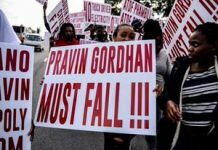
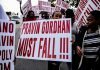
His narrative on a singular Gupta family is classical gordhanism, as I not so long ago ventured to define, rhetoric devoid of any critical analysis in asking simple questions as to what percentage of the state procurement budget in the nine years under Zuma went to the so-called powerful family SA is in Pavlovian sense classically conditioned to hate? Mbeki perhaps in tangible laziness of being the researcher we all know him to be does not ask who are the families that have always benefitted and continue to currently benefit from all SOE’s in particular ESKOM. Since he is on the subject of powerful single families can he explain how Minister Fikile Mbalula in another era was summoned and instructed by Johann Rupert on the appointment of Gordhan? To Mbeki, we say it’s a fallacy to argue the Guptas was a powerful family without admitting powerful business families in SA that since Mandela directed black political leadership. . Shall we forget that Nelson Mandela had almost weekly meetings with the Oppenheimer; Menell and other families, later even Douw Steyn to the annoyance of the late academic and PFP politician Frederick Van Zyl Slabbert, at DBSA as one of a multiplicity of venues? He thus falls for the crafted deflection of a Gupta family, please pardon my metaphor, sheer mosquitos in the procurement economy of an SA state while he is oblivious to the control of the superior race in beneficiaries from a SA state procurement reality.
Shall we remind arguably the second coming of Nkrumah; it was in these meetings that Mandela was persuaded on the policy of nationalization among others. To pretend white monopoly capital known for its family diaphragm did not dictate to Mbeki himself is to be farcical. Let us understand and ask for an explanation of the wealth or Mrs Zanele Mbeki in the absence of white monopoly capital’s ever-pervasive family hand. We warrant asking why there is no energy to understand state capture through the frames of this reality of family’s and spouses benefiting in the aim of controlling political power. Let us discuss state capture beyond the media crime as advanced and engage why the case cannot be made that the ANC and its presidents have not always [since late 80’’s] been captured by capital regardless to which family these in choice preferred to associate with.
There is another aspect here that Mbeki raises in a claim of Gupta family dictating to government, this again is directly drawn from the now withdrawn testimony of former Member of Parliament Vytjie Mentor. . Again, Mbeki conveniently does not critically engage Mentor and others who participate in this what I increasingly consider a latent-labour-dispute commission gazetted as the State of Capture Commission because he needs this as his base to argue what he previously advanced of an unfit Zuma.
Finally, it appears virtually impossible for Africa’s most recent “philosopher-king” as academic Adebajo defined Mbeki, to ever own up in specifics. He will tell you the ANC must take stock, renew itself and he will hum this easy chorus in tenor-tone of a Jacob Zuma who brought state capture when he can’t say from the dawn of democracy what his role under Mandela era which was his first of three terms was in contribution of the presence of corruption and as is currently framed state capture.
Alas’ Mbeki will theorize in convenience on land yet he will never explain why his leadership with a two-thirds majority failed to deliver land for the disenfranchised masses. He will theorize and romanticize on an African identity yet when he is pushed to explain himself on this he silently backs off because some things are easier claimed than engaged.
We know corruption existed under Mbeki that corruption saw politically connected friends and their families enriched only because of proximity. The Oppenheimer directed BEE concept later ANC led policy he became the political face of delivered an intended thin buffer-zone of highly compromised ANC political elites, the destruction of the ANC. Most of those who benefitted never worked a day in their lives are hardly any entrepreneurs but were financially dry-cleaned with enormous benefit to apartheid and colonial beneficiaries. He will never admit that every BEE deal left apartheid and colonial beneficiaries financially more empowered and wealthier.
A more appropriate analysis is to ask what the role of capital was since the late 1980s in the ANC in corrupting its leaders from Mandela when they received houses and benefits from the apartheid and colonial economic elite. That capital may have been in small amounts shared by Indian business families as the forerunners for colossal amounts later shared by apartheid and colonial beneficiaries with hungry ANC leaders. Was the ANC not already there sold by the very ones who today are filthy rich and still want to dictate a hypocritical morality when they are the signposts of an ANC that were bought by the highest bidders until in December 2017 and ANC presidential election could cost R1.2bn to win by 179 votes as you rightly guessed sponsored by the same colonial and apartheid beneficiaries this time openly so.
In conclusion, I shall postulate perhaps one reason why the ANC will never be renewed or renew itself is the convenient amnesia of factional minds, drowning in denialism of its very leaders such as Mbeki whose primary interest, unfortunately, until now has remained self.
Unfortunately, no one in the factionalized ANC given their preoccupation to outmaneuver the other cannot have the honesty of heart and the presence of mind to engage Mbeki hence he in the monotonous sense will continue with his narrative in kaftans of gospel claims on untested claims of state capture because it works for his narrow agenda. Unfortunately, Mbeki’s attempts at rescuing aspects of his legacy warrant him throwing mud on Zuma it increasingly appears this is the only means for him to have a an untainted legacy that is purportedly above reproach and free of question. If you ask me his interview is plain politics a luxury of the elites Mbeki the politician in this sense continues his attempt at managing history from his vantage point.
A Lifelong Social Justice Activist Political Commentator & Writer is a SARChi D. Litt.et. Phil candidate in Political Science with the University of Johannesburg. Chairperson of TMoSA Foundation – The Thinking Masses of SA